ServicesRain Chains
Rain Chains in James Island
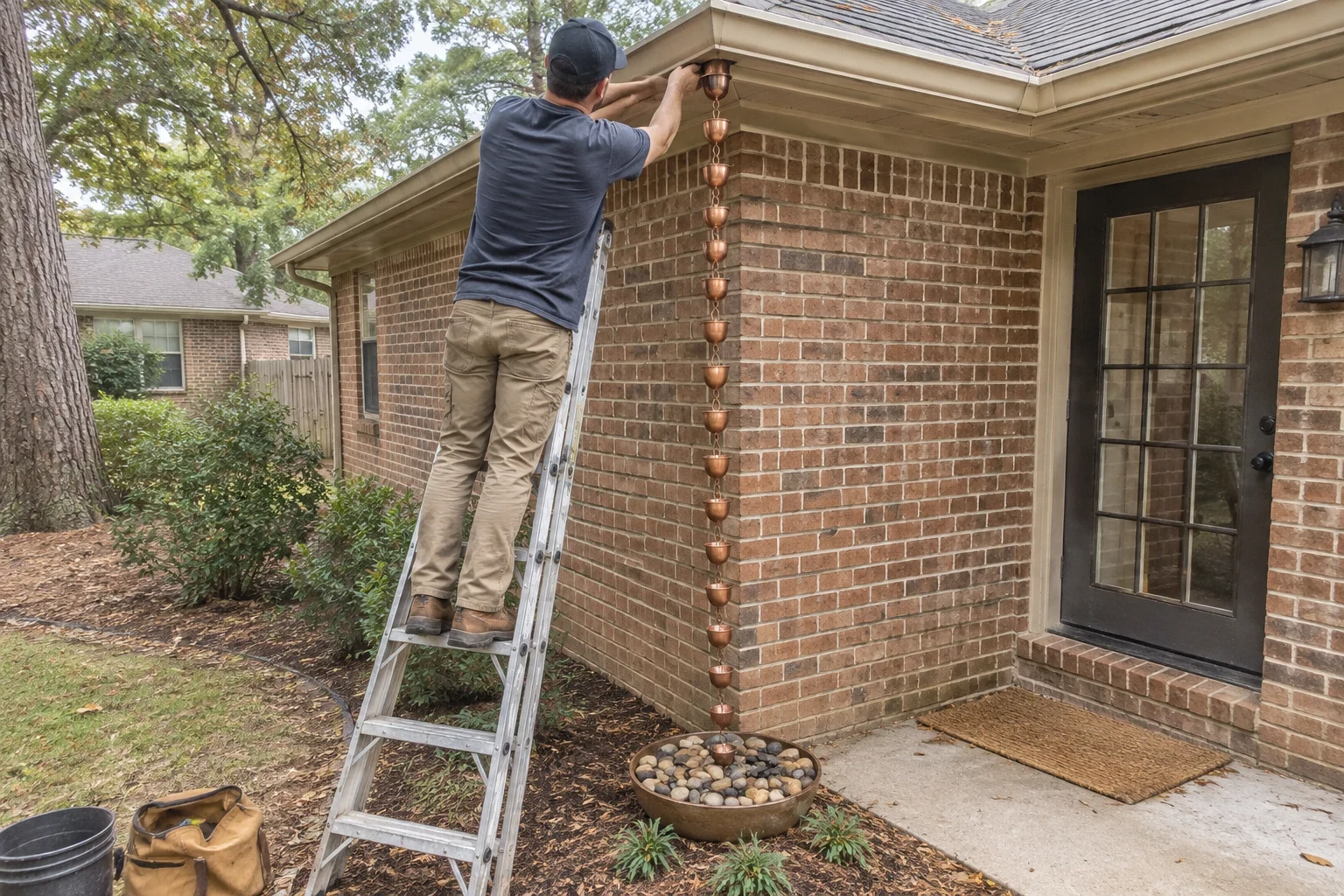
A rain chain guides roof water down to the ground where you can see it. We help you pick the right metal and style for your home, size it for heavy rain, and hang it so it works in a storm, not just on a sunny afternoon.
Where a Chain Beats a Closed Drain
Instead of sending roof water through a closed pipe, a chain lets it run down open cups or links from the gutter outlet. The roof still drains the way it should. You also get to see and hear the water on its way to the ground.
Good spots are an entry, a porch corner, a patio or the edge of a garden bed. A poor spot is a corner where a long stretch of roof pours most of its water into one outlet. If we see that on your home, we will say so and suggest leaving a closed drain in place.
Most of the decision is metal and style. Copper, aluminum and steel each age differently in salt air, and cups carry much more water than open links. We go over those trade-offs with you before anything gets hung.
What Our Rain Chain Work Includes
A look at the roof and gutter
We check how much roof area feeds the outlet and whether the gutter is sound. A chain can only be as good as the gutter it hangs from.
Help picking the metal
Copper turns brown and then green over the years and lasts a long time. Aluminum is light, won't rust and comes in colors. Galvanized or powder-coated steel costs less but needs watching near the marsh, where salt air finds any scratch.
Cup or link style
Cup chains catch and pass water from cup to cup, so they handle hard rain with less splash. Link chains look lighter and simpler but spill more in a downpour. We match the style to how much water that corner sees.
Outlet adapter and hanger
We fit a hanger or funnel adapter to the gutter outlet so water goes into the chain, not around it. A loose fit is the most common reason a rain chain sprays.
Anchoring at the bottom
We stake or weight the bottom so wind can't swing the chain into your siding or windows. You can finish it with a basin, a gravel bed or a rain barrel.
Signs a Rain Chain Could Work for Your Home
A pipe that blocks the view
A closed drain on a front porch or by a window can look clunky. A chain does the same job and looks like it belongs there.
Water splashing at an entry
If the gutter outlet by your door just drips onto the steps, a chain gives that water a clear path down to a basin or gravel.
Your old chain overflows
Water jumping off a link chain in a summer storm means it is undersized for that roof. A cup style or wider cups usually fixes it.
Rust streaks or a worn finish
Cheap steel chains rust fast near salt water. If yours is staining the siding below, it is time for copper or aluminum.
You want to catch rainwater
A chain can feed a rain barrel or a planted bed. That is an easy way to reuse roof water around the yard.
How a Rain Chain Job Goes
- 1
Phone call
You tell us where you want the chain and what you have now. We set a time to come look.
- 2
On-site walk-through
We look at the roof area, the gutter and the ground. We show you samples of the metals and styles and explain how each one ages.
- 3
Written estimate
You get the price for the chain, the adapter, the anchor and the labor, line by line. Nothing gets added later without your OK.
- 4
Install day
Most chains go up in an hour or two. We fit the adapter, hang the chain to the right length, anchor the bottom and set the basin or gravel. Then we run water through it with a hose so you can watch it work.
- 5
Cleanup
We pick up packaging, scraps and any old parts we took down. The area is left the way we found it, plus a new chain.
What Moves the Price of a Rain Chain
Most of the cost is the chain itself, and the metal is the biggest factor. Labor is usually small unless the gutter needs work first. We price it out in writing after we have seen the spot.
- Metal
- Solid copper costs the most. Aluminum and powder-coated steel cost less. Thin copper-plated chains are cheap, but the plating wears off.
- Length
- A two-story drop needs a much longer chain than a single-story porch, so the price climbs with height.
- Style and cup size
- Large or decorative cups cost more than plain links. Bigger cups also carry more water, which can be worth it on a busy corner.
- Gutter condition
- If the gutter is sagging or leaking at the outlet, it needs fixing first. We can handle that as gutter repair and will list it separately.
- Ground finish
- A simple stake costs little. A basin, a stone bed or a rain barrel setup adds parts and time.
Rain Chain Questions We Hear
Something not covered here? (843) 350-8732
Can a rain chain handle a heavy summer storm?
A cup chain sized for the roof area handles most storms well. Some splash in a true downpour is normal. If a corner takes water from a big roof section, we may tell you a chain is not the right fit there.
Which metal holds up best near salt water?
Copper and aluminum both do well. Copper changes color over time, which most people like. Bare or cheaply coated steel tends to rust within a few seasons here.
Will it be noisy?
You will hear water moving when it rains. Cup chains are a soft trickle in light rain and louder in a storm. Most people put them by a porch or patio because they enjoy the sound.
Do rain chains clog?
Open links rarely clog. Cups can collect leaves if the roof above has a lot of tree cover. Pairing the chain with gutter guards keeps most debris out of the outlet.
Is the work covered?
Yes. Our installs carry a 2-year workmanship warranty, so if the hanger or anchor we put in comes loose, we come back and fix it. We have been doing this work for 8 years.
Pick the Right Chain Before It Goes Up
Tell us where you want it and we will come out, show you the metals side by side and give you a written price. If you are also thinking about gutter installation or gutter covers, we can look at that on the same visit.